Interactive English Speaking Practice Exercises That Work

Interactive exercises that build real speaking fluency rather than just passive recognition.

Imagine having a personal English tutor available 24/7 at a fraction of the cost. One that never judges your mistakes and adapts to your exact learning pace.
With AI-powered language practice, you get limitless English speaking practice, instant feedback, and real-world scenarios tailored to your daily life. No scheduling conflicts, no expensive hourly rates, and no embarrassment when you stumble over words.
This guide shows you how to leverage interactive AI exercises that transform your English speaking skills through practical, pressure-free practice that fits your schedule and budget.
Key takeaways
The key takeaways of this guide include:
- A highlight of the challenges of traditional English-speaking practice
- An introduction to Loora AI, which offers online AI conversation features at an affordable subscription basis
- Engaging English conversation exercises you can have using AI
Understanding the challenges of traditional English-speaking practice
Practicing speaking English on your own can feel frustrating and limiting, almost like talking to a wall with no way to know if you're improving. This challenge becomes even harder when you don't have anyone at home or in your community to practice with.
Having no native speaker to correct you when you hesitate or jumble your words makes it hard to know if you’re improving or just going in circles.
Then there’s the cost. Good conversation classes or one-on-one ESL English tutors often come with high price tags. You end up choosing cheaper, low-quality lessons or skipping talking exercises altogether, even though you really want to speak more fluently.
On top of that, staying motivated is tough. Without a clear goal or a friendly coach checking in, it’s easy to skip your practice day after day. You start with enthusiasm, but after a few awkward solo sessions, you lose energy.
All these challenges make "traditional" English-speaking exercises for adults feel unreachable.
The good news is that knowing what holds you back is the first step to finding effective English-speaking exercises.
How Loora solves these challenges
Given that self-learning programs focusing on spoken English can feel ineffective without consistent practice, Loora’s AI offers a cutting-edge solution by motivating you to engage regularly in realistic dialogues without judgment, ensuring progress is both convenient and confidence-building.
First, Loora hones your conversation skills using an AI chatbot that sounds like a native speaker anytime you want. No more hunting for language buddies or expensive tutors.
Next, it keeps costs low with an affordable subscription and daily practice sessions. You’ll get high-quality speaking practice without stretching your budget.
To tackle motivation, Loora turns each chat into an educational mini-goal. You earn badges, track your streak, and get encouragement that pushes you to keep going.
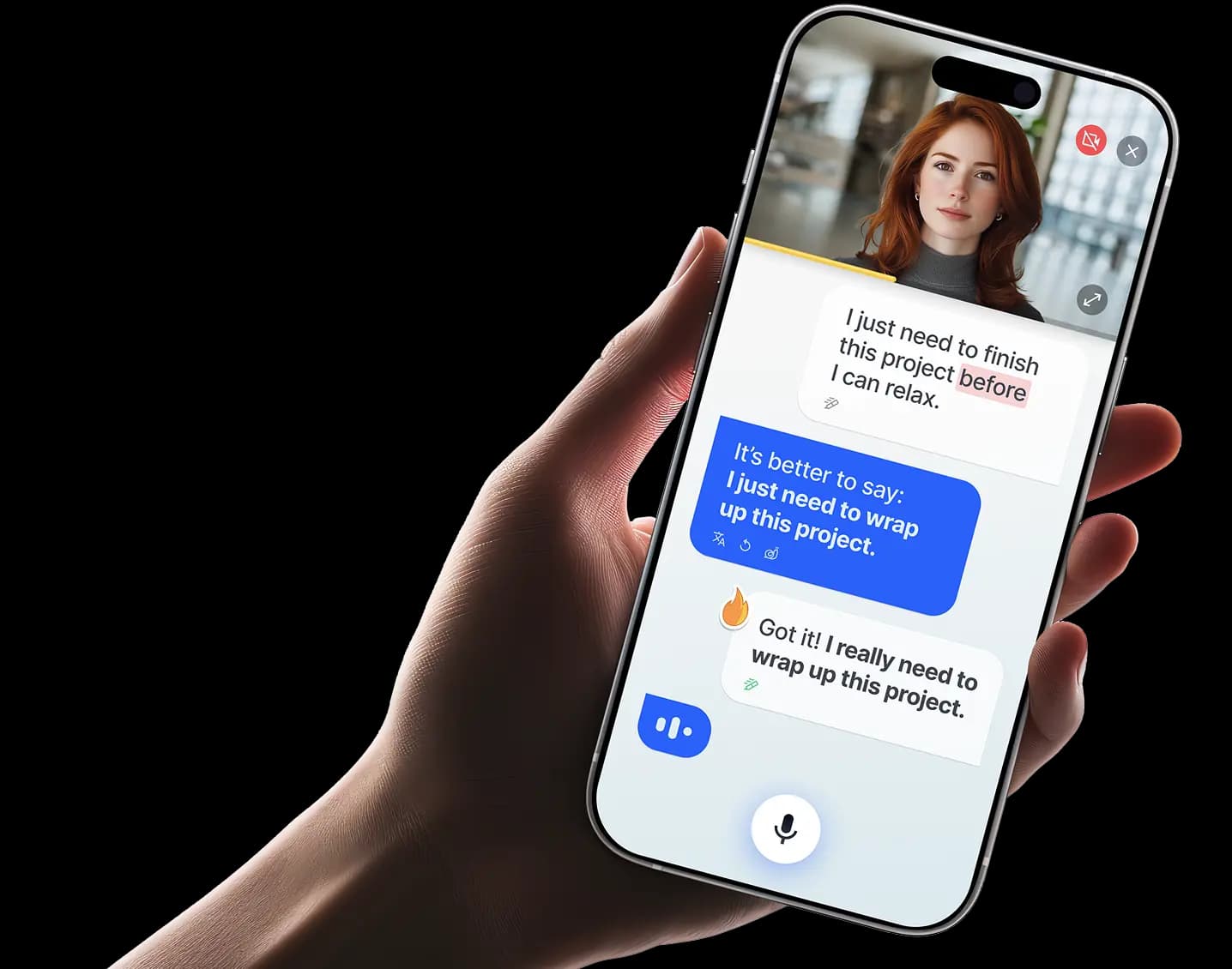
For feedback, Loora corrects your pronunciation and suggests better phrases right as you speak.
Finally, Loora fits into your day, all from your mobile. You can practice on the bus, during lunch breaks, or whenever you have five minutes. No more scheduling hassles or blank-stare mirror drills.

Engaging English English-speaking practice exercises using AI
Once you go down the AI English speaking practice route, old drills become fresh and fun. AI can tweak each exercise to match your level, interests, and schedule so you stay excited and keep learning faster. Here are some easy examples you can try today:
Role-Play conversations
In this exercise, you step into a full conversation by choosing both a character and a scene that match your interests or goals. Here’s how it works:
- Pick Your Role and Setting: You might be a café barista greeting a customer, a tourist asking for directions, or a job candidate in an interview. Choose a scene you care about. That makes the chat feel real and keeps you motivated.
- Start the Chat: Once you begin, Loora takes the other side of the conversation. If you're the barista, it becomes the customer ordering coffee. If you're the tourist, it acts as a local giving advice.
- Instant Hints and Corrections: When you struggle to find a word or make a grammar slip, Loora gently steps in. It might suggest a phrase ("You could say, 'Could I have a cappuccino, please?'") or model a quick response so you can repeat it and build confidence.
- Progress Tracking: After each role‑play, you get a summary of the words you used well, common communication mistakes to watch out for, and pronunciation tips to try next time. This helps you see real improvement over time.
Real-life scenario practice
In real-life scenario practice, you dive into everyday situations you might face so you learn the language that matters. Here’s how to get the most out of it:
- Choose a situation: Choose from your hobbies or something you'll actually do, such as ordering food at a street stall, hailing a taxi in a busy city, or checking into a hotel. Selecting tasks you care about makes practice feel useful and motivating.
- Set the scene: Loora adds realistic details: restaurant sounds, traffic noise, or friendly background chatter. These cues help you focus on speaking in a noisy environment, just like in real life.
- Listen and respond: Loora “plays” the clerk, driver, or receptionist. It asks you questions (“What would you like to order?” “Where are you headed?” “Can I see your passport, please?”). You answer out loud, practicing the exact phrases you’ll need.
Back-and-forth cadence
With an interactive back-and-forth cadence, you dive into a natural conversation rhythm that feels just like talking with a friend. Here’s how to make the most of it:
- Pick your topic: Like the real-life scenario, choose something you love: sports, travel, tech, movies, anything. The idea is that when you talk about what interests you, you stay engaged and curious.
- Start the conversation: Loora opens with a friendly question: “What game are you excited to watch this weekend?” or “Have you planned your next trip yet?”. You’ll then reply out loud, using your own English words and ideas.
- Dynamic responses: Loora listens to your answer and follows up naturally. If you say you love basketball, the system might ask, “Who’s your favorite player?” or share a fun fact. That keeps the chat flowing, just like a real friend would.
Tips on incorporating English speaking practice exercises into daily routines
Making English speaking part of your day doesn’t have to feel like extra work. Pick just one of these five simple habits, and you’ll start speaking more every single day with no extra study time needed.
Cook and chat
Talk to Loora while you are cooking and see if she has any tips!
Record quick voice memos
Whenever an idea pops into your head, record a 30‑second voice note in English. Then play it back and pick one thing to improve: maybe a better word choice or clearer pronunciation. Listening to your recording over a week lets you see real improvements in your fluency.
Narrate your commute
On your way to work or school, describe what you see: “That red bus is full,” “I hear birds chirping.” Turning your commute into a live commentary builds habit and helps you use new vocabulary in context. You’ll start looking forward to your “on-the-go” speaking time.
Use AI mini‑chats
Set a daily reminder to open your Loora app for just five minutes. Ask for a quick role‑play (like ordering coffee, for example) or answer a fun question. These bite‑sized chats give you instant feedback and inject a bit of fun into your routine so you stay motivated.
Teach what you learn
After you learn a new word or phrase, explain it to a friend, family member, or even your pet out loud in English. Describe what it means, use it in a sentence, and ask a question about it. Teaching forces you to speak more and cement the new language in your mind.
Start with the easiest tip, and once that feels natural, add another. In no time, these small, daily speaking moments will build your confidence and fluency without extra “study” on your schedule.
Tracking progress and receiving feedback
Keeping track of your speaking and getting feedback is key to real improvement. Without knowing where you stand, you can't fix mistakes or celebrate wins. The great thing is that Loora now makes both of them even easier and more helpful.
First, tracking your practice shows you how much you’ve done and where you’re headed. Loora can log every chat you have, tallying your total minutes, new words learned, and speaking streaks.
Seeing a rising graph of your weekly practice or a list of words you’ve mastered gives you clear proof of progress, and that feels good.
Next, feedback helps you correct mistakes before they become habits. Loora listens as you speak and points out pronunciation slips. You then get instant tips you can apply right away instead of waiting days for a tutor's reply.
In the end, you’ll spot your strengths and tackle weak spots. With clear goals, instant fixes, and visible milestones, you stay motivated and see real change in your English speaking every day.
FAQs
How can I practice formal English speaking?
To practice formal English, focus on clear structure and polite language. Read short news articles or professional blogs aloud, paying attention to your tone and pacing.
Record yourself giving a brief presentation. It could sound like a work report or book summary. Listen back for any casual words or fillers ("um," "like"). Swap them with more formal phrases ("however," "therefore") and repeat until your speech sounds smooth and professional.
How can I practice for an English-speaking exam?
How can I practice for an English-speaking exam?
To prepare for an exam, start by reviewing the test format and typical question types (interview, picture description, discussion). Then, time yourself answering sample prompts out loud.
Use Loora or a study partner to simulate the exam setting, including strict time limits. After each practice run, note any weak spots like hesitation or unclear pronunciation and focus your next session on those areas.
How do I improve my pronunciation?
Clear speech comes from good mouth and tongue habits. Try these English conversation practice exercises daily:
- Tongue twisters: Repeat lines like “She sells seashells” slowly, then speed up.
- Shadowing: Listen to a short audio clip of a clear speaker and try to match their rhythm and sounds in real-time.
- Mouth stretching: Open wide, move your jaw side to side, and exaggerate vowel sounds (“aaah,” “eee,” “ooo”) to warm up before talking.
What are some public speaking exercises?
Public speaking skills grow with these drills:
- Mirror practice: Deliver a short speech—like welcoming a group—while watching yourself. Notice your posture and facial expressions.
- Cue‑card talk: Start by writing five keywords on cards, shuffle them, and give a 2‑minute talk using only those words to guide you.
- Q&A drill: Have a friend ask random questions about your speech topics. Practice thinking on your feet and keeping your answers clear.
Which activity is the most helpful in exercising speaking skills?
While all conversation exercises and activities are helpful, real‑time interactive dialogues tend to be the most effective. Whether with Loora or a conversation partner, flowing back‑and‑forth talk mimics real situations. It pushes you to use new words, correct mistakes instantly, and build confidence faster than solo drills.
Engage in personalized conversations with Loora, the most advanced AI English tutor, and open doors to limitless opportunities.