Top Tips for Daily English Speaking Practice You'll Enjoy

Practical tips and routines for building a consistent daily speaking habit.

We already talk to machines more than we care to admit. We ask Siri and other AI chat assistants for all kinds of information and general questions these days, yet when it comes to practicing English conversation, we immediately think we need another human being present.
What if we applied that same comfort level with AI chat models to language learning? The technology that already understands your voice commands and responds intelligently can also engage you in meaningful language conversation practice.
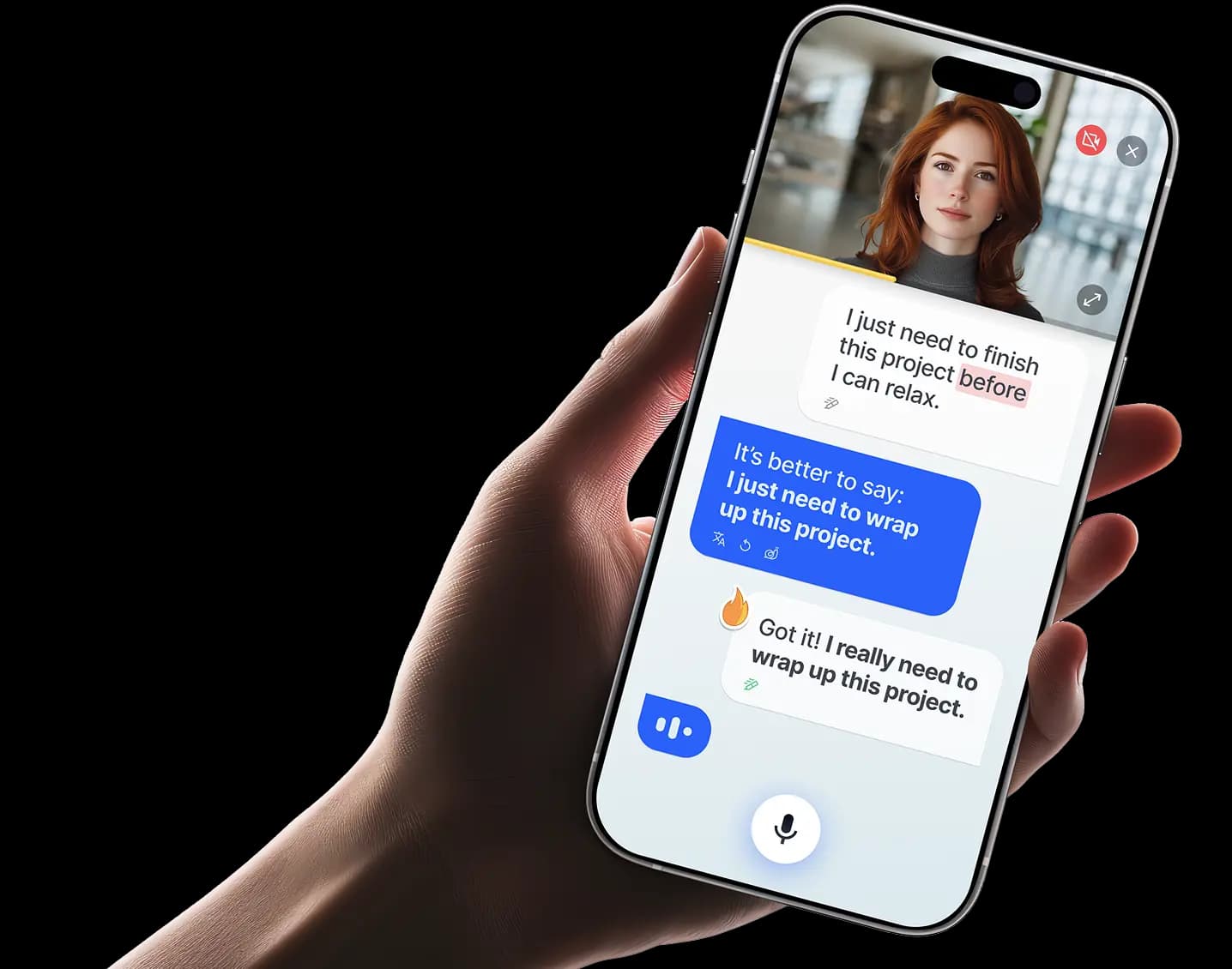
The key advantage here is specificity. For instance, unlike ChatGPT that’s general in its purpose, language learning models like Loora are built specifically for learning English, with feedback, lessons and curriculum.
This use case is precisely what you need for daily English speaking practice, because the best practice occurs when you get to speak in a focused setup, receive immediate feedback, and iterate quickly without fuss.
To address the challenge of finding consistent and judgment-free English-speaking practice, Loora offers an innovative AI English speaking partner that facilitates 24/7 access to natural dialogues, enabling users to practice effectively anytime and anywhere.
Key takeaways
Further into this guide, readers will find the following key takeaways:
- An explanation of why daily consistency matters more than perfect practice sessions
- A breakdown of common barriers that prevent regular speaking practice
- An overview of specific practice scenarios you can customize for your personal and professional goals
Why daily English speaking practice matters
The entire concept of language acquisition follows predictable patterns, not unlike muscle memory development. Your brain builds the neural pathways for English speaking, and consistent practice and repetition make your prompts and responses more automatic.
But perfection isn’t the goal here. Many learners tend to spend more time practicing one scenario over the other, yet wonder why they still get anxious discussing both in the real world.
Daily English conversation practice delivers several measurable benefits, such as:
- Improved fluency and natural speech patterns
- Reduced speaking anxiety
- Enhanced vocabulary retention
- Better pronunciation habits
Overcoming barriers to English-speaking practice
When we treat conversation practice like it requires some special conditions, it causes friction in the learning process.
This friction often shows up in three ways: scheduling conflicts, high costs, and fear of judgment. It’s why many traditional English classes and tutoring programs demand coordinated calendars that don’t always tally with your available time and sessions that aren’t exactly cheap.
Even if you scale those hurdles, you'd still have to deal with the subtle pressure of English-speaking practice in front of another person.
How does Loora solve these challenges for you?
The app is available 24/7, so you can practice any time your schedule allows. It’s an affordable monthly subscription and you get real-time, judgement-free grammar and pronunciation feedback.
Loora achieves all these using the same mobile technology you already trust for daily communication. You get to chat with the AI tutor in the application using voice commands and contextual prompts, while it gives its replies instantly.
These resources create a simple yet powerful approach to making your English conversation practice more dynamic.
Common scenarios for English-speaking practice with Loora
Context-specific practice accelerates language acquisition more effectively than generic conversation drills. Thankfully, Loora excels in specific role-play scenarios, and you can direct it even further to your needs. Below are examples of common English conversation scenarios, with tips on how you can maintain the authentic feel of each context:
Casual conversations and daily interactions
Everyday English conversation forms the foundation of natural communication. It‘s where you get to talk about topics you're genuinely interested in. Loora's daily conversation feature lets you chat without feeling like you’re going through a script.
Example dialogues:
Weekend plans conversation
Loora: "Any exciting plans for the weekend?"
You: "I'm thinking of visiting that new art museum downtown. Have you heard anything about their current exhibition?"
Loora: "The contemporary art collection? I've read some great reviews. What draws you to that particular style?"
Sharing opinions
You: "I just watched that new documentary about climate change. It was really eye-opening."
Loora: "What aspect surprised you the most? Was it the data about ocean temperatures or something else?"
You: "The impact on small island nations was devastating. I had no idea it was happening so quickly."
Professional and business communication
English-speaking in professional contexts requires different registers, phrases, and formality levels, but Loora's business-focused role-plays simulate workplace scenarios with appropriate vocabulary just fine.
Example dialogues:
Team meeting discussion
You: "I'd like to propose we extend the project deadline by two weeks to ensure quality deliverables."
Loora: "What specific challenges are causing the delay? How would the extension benefit the outcome?"
You: "The client requested additional features that require thorough testing. Rushing could compromise user experience."
Client presentation
Loora: "Can you walk us through your content distribution strategy for next quarter?"
You: "Certainly. We're focusing on three key areas: digital advertising, content marketing, and strategic partnerships."
Loora: "What metrics will you use to measure success, and what's your projected ROI?"
Travel and cultural scenarios
Travel conversations require quick thinking and cultural awareness. Here, you can practice navigating airports, ordering at restaurants, asking for directions, and handling unexpected situations that arise while traveling.
Example Dialogue:
You: "Excuse me, there's no hot water in my room, and I have an important meeting this morning."
Loora (as hotel staff): "I apologize for the inconvenience. Let me check with maintenance. Would you prefer to move to a different room or wait for repairs?"
You: "Moving rooms would be better since I need to shower before my 9 AM meeting."
Academic and educational contexts
Practicing research presentations, seminars, or explanations of complex concepts to different audiences with varying levels of expertise is how you can use Loora in an academic setting.
Example dialogue:
You: "My research focuses on renewable energy adoption in developing countries."
Loora: "What are the main barriers you've identified that prevent widespread adoption?"
You: "Cost and infrastructure limitations are significant factors, but policy frameworks also play a crucial role."
Tips on incorporating daily English speaking practice into your routine
Your phone already occupies a significant chunk of your daily routine. Why not incorporate some English-speaking practice into your phone usage? These tips can help you get started.
Practice during existing phone habits
Replace “doomscrolling” with English conversation practice. You probably already check your phone 96 times per day on average, with each check lasting up to 5 minutes. There’s definitely a 2-3 minute practice opportunity in there. Instead of opening social media during your morning coffee or while waiting for the bus, open Loora and engage in a quick conversation about your plans for the day.
Use commute time productively
Speaking of commutes, you can make them work for your speaking practice goals. It doesn’t matter if you're walking to work, sitting on public transportation, or stuck in traffic - Loora can work for you.
Its hands-free conversation mode works with earbuds, allowing you to practice speaking English while commuting without appearing any different from someone taking a phone call.
Set micro-practice triggers
You can also connect practice to your existing daily actions. For instance, every time you charge your phone, practice one role-play scenario or have a 5-minute conversation about your upcoming day. You’re creating useful trigger-based habits that way.
What’s even better is you aren’t burning extra time, just repurposing moments you're already spending.
Create streaks that compound
A little engagement tracking can do your brain's reward system a world of good as you keep practicing, which is why Loora has a "Streak" feature that taps into the same psychological mechanisms that make mobile games as engaging as they are.
FAQs
How can I practice speaking English by myself?
It’s easy - talk to Loora AI.
Traditional English-speaking courses and lessons often require elaborate scheduling, without the convenience of instant feedback. Loora's features are tailored to handle your solo practice sessions 24/7, with no awkward small talk required.
How many hours a day should I practice English?
It depends, but the basic principle here is that spoken English practice is more about consistency than marathon sessions. We've seen users improve faster with 15-20 minutes daily rather than cramming hours on weekends.
What grammar is needed to speak English?
You actually need less than you think. Focus on present, past, and future tenses first, as those cover about 80% of real conversations.
Loora adapts to your level anyway, so whether you're intermediate or just starting, it won't throw advanced English grammar rules at you until you're ready.
How long does it take to speak English fluently?
How long does it take to speak English fluently?
You'll have to consider your starting point and what "fluent" means to you. ESL learners typically see confidence improvements in 2-3 months with daily practice. Complete fluency takes about 1-2 years.
You'll start having real conversations way before you hit "fluent," though. Loora users report feeling comfortable in business conversation scenarios after just 6 weeks. These are the metrics that truly matter.
What are the 7 rules for excellent English speaking?
They are:
- Practicing daily (even 10 minutes counts)
- Focusing on communication over perfection
- Learning idioms in context, not lists
- Recording and listening to yourself speaking
- Using English oral practice with real scenarios
- Not being scared to make mistakes
- Finding activities to improve English speaking skills that you actually enjoy.
It’s a good thing that the AI-based Loora application handles the more technical part of these activities, so you can focus on just talking and getting better at that.
Engage in personalized conversations with Loora, the most advanced AI English tutor, and open doors to limitless opportunities.