Must-Read Books to Improve Your English Speaking Skills

Curated reading list for learners who want to boost their spoken English through literature.

Books can help you lay the right foundation concerning your English skills. Reading books to improve English speaking skills introduces you to a wide range of words and expressions in context, which you can then use in your own speech.
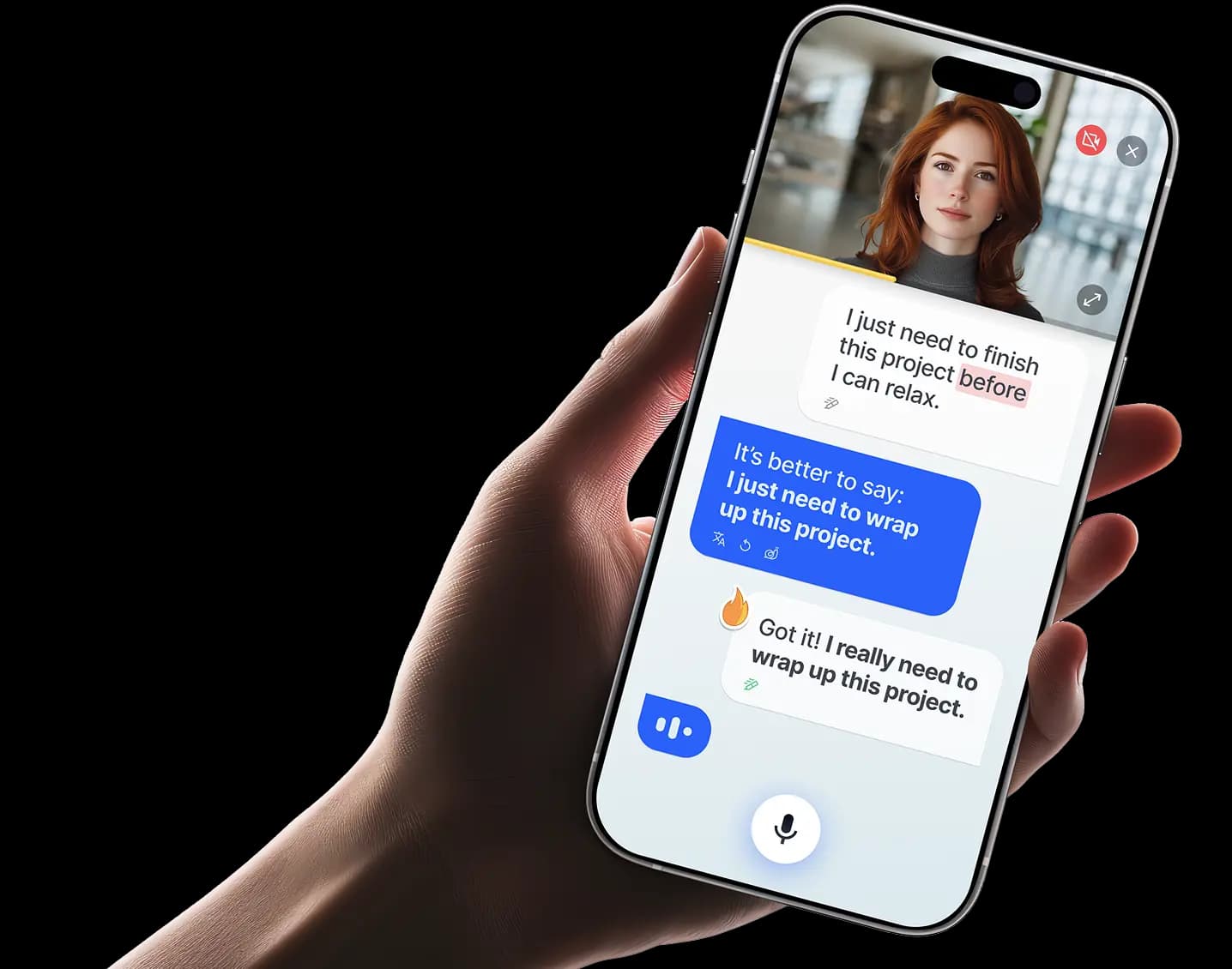
Granted, the pressure of an actual conversation sometimes require extra practice, but AI-powered language tutor apps like Loora can always help. That way, you get to learn about the language and how to use it when an actual human being is waiting for your response.
Thankfully, some books get both contexts right. They capture the fact that speaking English is a whole different skill that needs its own kind of practice beyond grammar and vocabulary memorization.
You need these kinds of books that help your English speaking journey in record time, and this article has the best recommendations.
Key takeaways
Further down the article, you’ll find the following key takeaways:
- An outline of the best books to learn English, with particular focus on dialogue, conversation patterns, and real-world scenarios rather than just grammar rules
- Tips on combining traditional books to improve English with modern AI-powered conversation practice to create the most effective learning experience
- Tips for consistent daily practice with materials matched to your current skill level and specific speaking goals
Challenges in choosing the right resources for English speaking
Many ESL students are familiar with standing in a bookstore or scrolling through endless online lists, wondering which of the hundreds of English learning books will actually help them improve their English.
The reality is that most spoken English textbooks fall into a frustrating trap: they teach you about the English language without teaching you how to use it in real conversation. They might focus heavily on grammar rules and vocabulary memorization, but fall short in preparing students for dynamic, real-world interactions where immediate feedback and contextual understanding are crucial
Most English-speaking books are fine when teaching you about the fundamentals of English, but flounder on how to actually use it when someone asks how your last weekend was.
So, you find yourself struggling with the context around that question, wondering what words outside of “good” and “yes” would fit. Traditional books set you up by teaching you to memorize grammar rules and vocabulary words, and stopping at that.
What’s more, you don’t get immediate feedback if you rely only on conventional books to improve English. Say you’re still practicing how to pronounce "thorough" correctly. It’s possible to accidentally mispronounce it for "through" from time to time, especially when someone isn’t giving you pronunciation feedback quickly enough.
Against these challenges of finding focused speaking practice, Loora allows anyone to significantly enhance their spoken English with AI-powered, interactive practice tailored to specific needs.
Unlike static books that can't respond to your unique learning pace and speaking challenges, Loora provides dynamic English AI conversations that adapt to your skill level and help you practice the exact scenarios you encounter in real life. It also helps that it can be used in conjunction with a textbook to reinforce the learning process. Discover how Loora's personalized solution can elevate your communication skills through tailored practice sessions.
Top recommended books to improve your English speaking skills
The following books to improve English speaking skills can help you on your learning journey, thanks to their practical approach to developing conversational abilities:
English Pronunciation in Use by Mark Hancock
What it teaches: How sounds work in natural speech patterns, including intonation, rhythm, stress, and connected speech. You'll learn why native speakers say "Wanna go?" instead of "Want to go?" and how word stress changes meaning.
Book Practice: Work through the audio exercises, repeating phrases and marking stress patterns. Focus on one unit per day (e.g., Unit 12: Weak forms in common words).
Practice with Loora: Tell Loora: "I'm working on weak forms and connected speech. Can we have a casual conversation about weekend plans? Please correct me if my pronunciation sounds too formal or unnatural." Loora will model natural speech patterns and gently correct when you over-pronounce words like "to," "and," or "can."
Expected Result: Within 3-4 weeks, you'll sound noticeably more natural. Native speakers will stop asking you to repeat yourself, and you'll understand fast speech more easily because you're producing it yourself.
Pro tip: Record yourself reading a paragraph before and after using this book in tandem with Loora. The difference will be dramatic.
Let's Talk 1, 2, 3 Series by Leo Jones
What it teaches: Realistic conversation frameworks for social and professional situations, from making small talk at parties to discussing opinions on current events. Each level includes conversation starters, follow-up questions, and natural responses.
Book Practice: Complete the pair-work activities (even if you're studying alone, practice both roles). For example, Let's Talk 2, Unit 4 teaches you to discuss preferences: "I'd rather... than..." and "I'm more into..."
Practice with Loora: Tell Loora: "I just learned conversation structures for discussing preferences. Let's talk about our favorite movies or hobbies. Please use the 'I'd rather' and 'I'm more into' structures too, and let me know if I use them naturally." Loora will engage in authentic back-and-forth dialogue and model these structures in context.
Expected Result: After completing one book level (6-8 weeks with daily Loora practice), you'll handle common social situations without mentally translating. You'll naturally ask follow-up questions and keep conversations going smoothly.
Pro tip: Use Loora to practice the same scenario three times over one week. You'll notice yourself becoming more fluent and creative each time.
Excuse Me, Could You Repeat That? by Cheryl Pavlik
What it teaches: Recovery strategies when you don't understand something—polite ways to ask for repetition, clarification techniques ("Do you mean...?"), and conversation-saving phrases that buy you some thinking time.
Book Practice: Memorize the key phrases in each chapter, like "I didn't quite catch that," "Could you say that another way?" and "So what you're saying is..."
Practice with Loora: Tell Loora: "Please speak at native speed and use some idioms or complex vocabulary. When I don't understand, I'll practice asking for clarification using phrases like 'Could you say that another way?' or 'I'm not sure I follow.'"
Expected Result: Within 2 weeks, you'll eliminate awkward silences. Instead of panicking when you don't understand, you'll confidently ask for clarification and keep the conversation flowing.
Pro tip: This is essential for job interviews and business meetings. Practice with Loora using professional scenarios where the stakes feel higher.

American English Pronunciation Practice by Heather Hansen
What it teaches: The musicality of American English in pitch changes, thought groups, word linking, and the subtle rhythm that makes speech sound fluent rather than choppy. Includes exercises on reducing vowels and the American "R" sound.
Book Practice: Work with the audio tracks, shadowing (speaking simultaneously with) native speakers. Focus on thought groups by pausing at meaningful breaks, not after every word.
Practice with Loora: Tell Loora: "I'm working on American English rhythm and intonation. Can we discuss something I'm passionate about, like [your topic]? Please give me feedback on my rhythm, pausing, and whether I'm linking words naturally." Loora will highlight specific moments where your rhythm sounds non-native and help you smooth them out.
Expected Result: After 4-6 weeks, American English speakers will ask where in the U.S. you're from, not where you're originally from. Your speech will have the characteristic "flow" of native speakers.
Pro tip: Choose one TED talk, learn it using Hansen's techniques, then practice retelling the main ideas to Loora. This builds both pronunciation and spontaneous speaking skills.
Conversation Strategies by David Kehe and Peggy Dustin Kehe
What it teaches: The social choreography of conversations such as how to enter group discussions, change topics smoothly ("That reminds me..."), show active listening ("That's interesting because..."), and gracefully exit conversations.
Book Practice: Study the example dialogues showing good vs. awkward topic transitions. Practice the "echo and add" technique: repeat part of what someone said, then add your thoughts.
Practice with Loora: Tell Loora: "Let's have a conversation where we change topics several times. I'll practice transitioning smoothly using phrases like 'Speaking of which...' or 'That reminds me...' Please let me know if my transitions feel natural or abrupt." Loora will engage in multi-topic discussions and evaluate your conversational flow.
Expected Result: Within 3 weeks, you'll feel comfortable in networking events and group conversations. People will perceive you as socially skilled, not just linguistically competent.
Pro tip: Practice interrupting politely with Loora: "Sorry to interrupt, but..." This is crucial for professional environments where waiting for perfect silence means never speaking.
Simple English for Everyone by Louisa Moats
What it teaches: The power of simple, precise language. Why native speakers say "use" instead of "utilize" and "help" instead of "facilitate." Teaches you to express complex ideas with common words.
Book Practice: Take a paragraph you wrote using complex vocabulary and rewrite it using only the 2,000 most common English words. Notice how much clearer it becomes.
Practice with Loora: Tell Loora: "I tend to use complicated words because I want to sound educated. Can we discuss [complex topic like climate change or technology]? Please point out when simpler words would sound more natural." Loora will help you find the balance between sophistication and naturalness.
Expected Result: After 3-4 weeks, native speakers will stop saying "Your English is so good!" (which often means "but formal/unnatural"). They'll just talk to you normally because you sound like them.
Pro tip: This book is especially valuable for academic English speakers transitioning to professional or social English.
Advanced speaking solutions - integrating technology and traditional resources
While the right books will undoubtedly elevate your English speaking skills, the work doesn’t stop there. You still need the interactive practice that modern technology offers to get the full experience.
Reading materials will help you lay the right foundations for language patterns and vocabulary. You can then build on that with interactive practice, which helps you replicate the dynamic nature of real conversation.
Elevating English speaking skills with books and AI
Ideally, books to read to improve English speaking will teach you what to say and how the language structures work. However, you still have to figure out a way around the challenge of transforming that knowledge into fluent, natural speech. Luckily, AI-powered conversation practice can help out.
Think of them as reading partners, active as you read about conversation strategies in a book, learn the theory, and you practice them when done. With such an arrangement, you get to develop the muscle memory and confidence needed for real-world interactions.
Loora's unique features that enhance learning
Loora is the AI-powered application that bridges the gap between learning English and speaking it confidently. It works effectively when paired with books that teach you conversation patterns and vocabulary. Its chat-like environment provides an interactive practice environment where you can apply that knowledge immediately.
Key features that complement book learning:
Loora comes with the following features:
- Daily Conversations: Loora lets you chat about any subject you choose, which makes practice feel less like rigid studying. Pairing this feature with the right English books gets you more pronounced results. Say you're done reading about pronunciation techniques, you can immediately practice them in realistic conversation scenarios right after.
- Role-Play Practice for Real Situations: This feature lets you create conversation scenarios like job interviews, restaurant orders and business presentations. That allows you to practice contextual words, phrases and sentences in a conversation. You also get immediate feedback that speeds up the learning process and helps you improve much faster than reading alone.
- "Say It Like a Native": The “Say It Like a Native” feature helps you understand the subtle ways native speakers actually talk. It’s useful if you’d like to know the components that give fluent English its authenticity.
- Real Time Feedback: Loora's real-time feedback gives you immediate corrections while you're actually speaking. It works for both pronunciation and grammar and it's built to interrupt naturally without killing your conversation flow.
- Practice Streaks That Keep You Going: The app has its gamified “Streaks” system that tracks your daily practice routine, with the goal of helping you build a consistent habit without being pushy about it.
FAQs
Can I improve my English speaking skills simply by reading books?
Short answer’s no.
Reading books will only provide the valuable foundational knowledge for English learning, helping you understand language patterns, expand your vocabulary, and learn grammar rules. But it needs backup in the form of active practice around voice production, pronunciation, and real-time communication.
The best approach to achieving confident communication skills is to combine reading English materials with speaking practice simultaneously.
What kind of books help you speak better?
Any book that features tips on real-world conversations and useful communication techniques will be effective for your practice. You get to use the dialogue examples and practice exercises they offer to improve your spoken grammar.
Currently, “English Pronunciation in Use” and “Excuse me, Could You Repeat That” are some of the best books for learning English speaking.
How much should I read a day to improve my English?
30-45 minutes daily will get you started in the right direction. You may increase the time as you move from your current proficiency level.
Quality matters more than quantity, so it's better to read carefully and understand the material thoroughly than to rush through large amounts of text without proper comprehension.
Also note that for optimal language learning, it’s best to combine reading with speaking practice.
Which English novel is best for beginners?
Beginning English learners should choose novels with simple vocabulary, clear language structures, and engaging stories. That helps them get a baseline of their current speaking strengths and areas of focus.
You can go for simplified versions of classic novels or contemporary fiction written for young adult audiences. However, it’s worth mentioning that novels only develop reading comprehension and vocabulary rather than speaking skills.
You can supplement novel reading with books specifically designed for conversation practice to improve your spoken English uniformly.
What should I read daily to improve my English?
You can start by creating a daily reading routine around news articles. That helps you cover ground on current vocabulary.
Add English learning books for the structured language development they offer, and materials related to your personal or professional interests. Try to vary your reading sources to expose yourself to different language styles and contexts.
Most importantly, combine your daily reading with active speaking practice to ensure you can communicate effectively using the vocabulary and structures you learn through reading.
Engage in personalized conversations with Loora, the most advanced AI English tutor, and open doors to limitless opportunities.