Communication Skills for Business Professionals: Effective English for Meetings
Phrases, questions, and responses for navigating business meetings smoothly and professionally.

Your calendar is completely full. You have one meeting after another, video calls all day long. You barely have time to think. And something bothers you: you know you have good ideas. However, when it's your turn to speak, you stop. You worry: "Will my English be good enough? Will people understand what I really mean?"
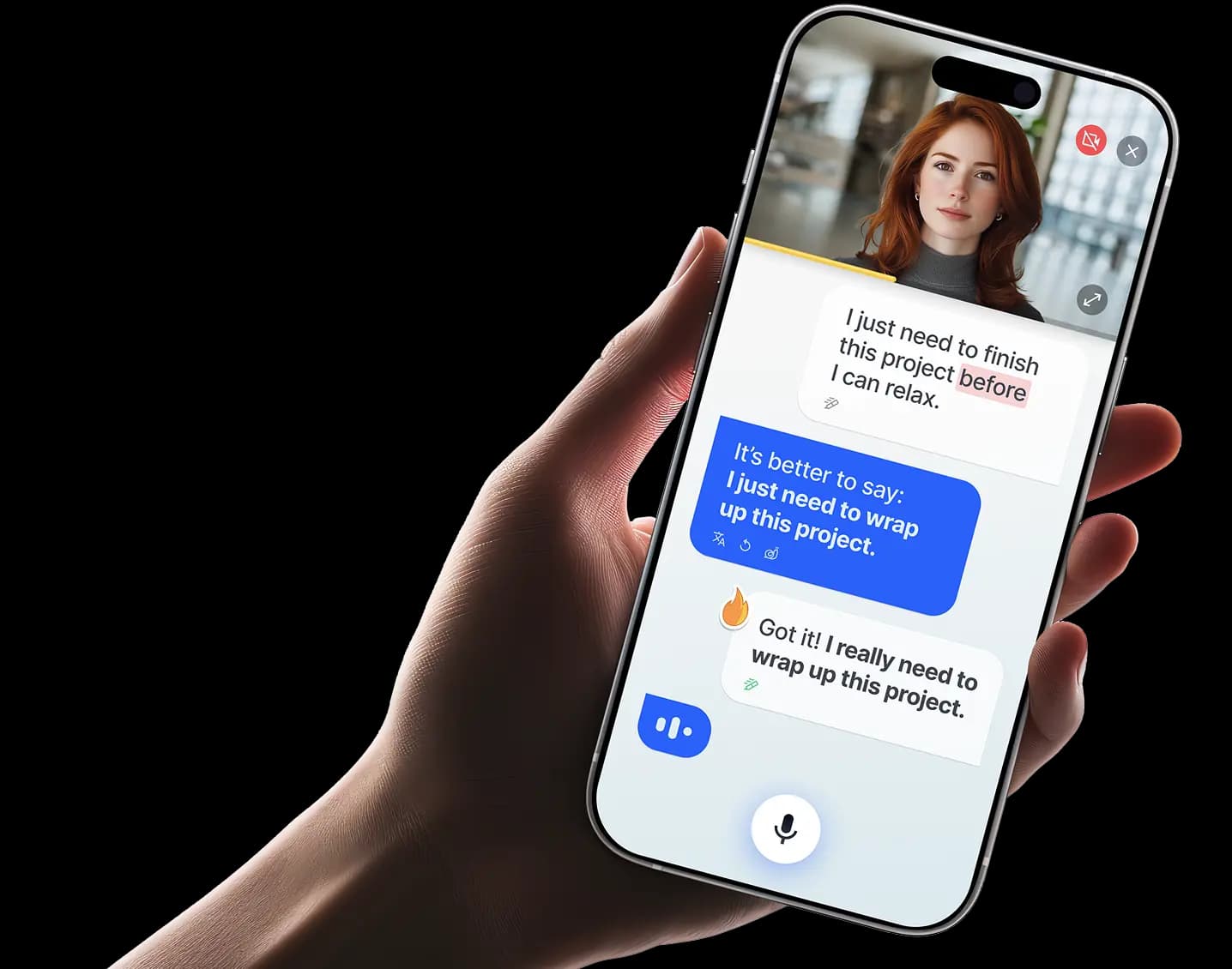
That’s when applications like Loora can help you practice English for meetings, without burdening your already-full schedule. It wraps around your existing workday, delivering speaking practice during any downtime. Practice for 10 minutes, review your feedback and you’ll feel that confidence kick in the moment you step up to talk.
In this article, you are going to learn the right strategy for learning English for meetings. It will help you sound confident and authoritative, without adding another event to your already full calendar.
Key takeaways
In this guide, you’ll find the following key takeaways:
- An understanding of why traditional language courses fail busy professionals
- A curated collection of essential English for meetings phrases organized by real meeting moments, with examples you can use immediately
- The three biggest barriers preventing professionals from participating confidently in English during meetings, and practical workarounds for each
- A guide to leveraging Loora's AI technology for business English meetings for the practice and feedback you need to boost your confidence.
The challenge faced by non-native English speakers in professional meetings
Your quarterly projections may be brilliant. How about your ability to explain them in English? At 9 AM with twelve participants staring at you through their screens?
The higher you climb professionally, the more your success depends on those spontaneous "How does the point you discussed affect our resolutions?" moments in English. You know exactly what needs to be done and have analyzed the problem better than anyone else in the room. But when it comes to articulating those insights with the confidence and fluency that commands attention, you find rather quickly that you need a different skill entirely.
Many already know enough business terminology to operate in the field, so vocabulary isn’t the issue here.
It's the split-second communication decisions: Should you disagree and get the strategy on a better track or will you let your worries about your imperfect English stop you from making a smart business decision?
The role of effective communication in meetings
If you can nail the aforementioned split-second communication cues, you already understand how to speak successfully at meetings. But that’s still only half the battle.
Your communication still needs to be clear and confident enough, even if you know all the right cues. Plus, the other participants should feel their voice heard. Balance is key. When you get those right, you get to show everyone in the room (or on the screen) that you belong there.
Not only that, effective communication helps pave the way for success in and out of the meeting rooms. You get to pitch a project without rambling or convince your boss that yes, that “quick update” actually stays under five minutes. Thankfully, Loora can help you practice all that properly.
Essential English phrases for meetings
Using the right phrase at the right time helps you elevate the bullet points on the meeting agenda. Below are some essential English phrases organized by the most common meeting moments:
Opening a meeting
The following phrases help you kick things off and set the right tone in a professional meeting. The rest of the meeting tends to follow the rhythm you set with these first words:
“Let’s get started by looking at today’s agenda.”
This works for both in-person and online meetings. It's clear, simple, and reminds participants that there's a plan to be considered in the meeting.
Example:
- You: "Good morning, everyone. Let's get started by looking at today's agenda."
- Participant: "Sounds good. Can we start with the presentations on the Q3 budget?"
“Before we dive in, let’s quickly introduce ourselves.”
This phrase is great for meetings with new participants or cross-team collaboration.
Example:
- You: "Before we dive in, let's quickly introduce ourselves."
- New colleague: “I’m Ana, joining from the marketing team.”
Making contributions
These expressions allow you to add value to the conversation.
“I’d like to add something here.”
This is a polite way to jump into the discussion without cutting people off.
Example:
- Participant 1: "The campaign launch is scheduled for next month."
- You: "I'd like to add something here. Could we align it with the product release for better impact?"
“One good idea might be…”
This phrase maintains a constructive tone while ensuring your idea sounds like a team win.
Example:
- You: “One good idea might be to run a quick survey before launch. It’ll give us useful data.”
Disagreeing politely
These phrases allow you to disagree with points or topics during meetings, using clear language and the right level of diplomacy.
“I see your point, but I’d suggest…”
This expression lets you acknowledge their contribution while steering the conversation.
Example:
- Colleague: "We should extend the deadline by a month."
- You: “I see your point, but I’d suggest we keep the timeline and adjust resources instead.”
“I’m not sure that approach will work for this team.”
This is a more direct disapproval, but still professional.
Example:
- Colleague: "Let's split the project evenly between departments."
- You: “I’m not sure that approach will work for this team. Marketing is already stretched thin.”
Asking questions and clarifications
You can use these questions to keep yourself engaged during the meeting and ensure you don’t nod along to something you don’t understand.
“Could you clarify that last point?”
This straightforward question is useful in almost every meeting.
Example:
- Presenter: "We'll need to realign resources across functions."
- You: "Could you clarify that last point? Do you mean shifting people between teams?"
“What’s the main takeaway we should note here?”
This question prevents conversations from drifting endlessly.
Example:
- Colleague: "We'll need to run more tests before release."
- You: “What’s the main takeaway we should note here—delay or proceed in parallel?”
Handling interruptions
Sometimes, a meeting participant wants to jump in before you have finished making your point. These phrases help you take back space politely.
“If I could just finish my point…”
This is a respectful expression, but clear that you’re not done talking.
Example:
- Colleague interrupts mid-sentence.
- You: "If I could just finish my point, then we can circle back."
“Let’s hear from others before we move on.”
Another useful statement for when one participant dominates the floor.
Example:
- Colleague: "And another thing we should —"
- You: “Let’s hear from others before we move on. Ana, what’s your view on this?”
Summarizing and closing a meeting
The following are expressions and impressive words for meetings that help you end with clarity and give the participants something to remember the meeting by:
“To recap, the main action points are…”
This phrase helps you make sure everyone leaves with the same understanding.
Example:
- You: “To recap, the main action points are: finalize the Q3 budget, confirm the launch date, and assign tasks by Friday."
“Thanks, everyone. Let’s confirm next steps.”
This expression signals closure and accountability.
Example:
- You: “Thanks, everyone. Let’s confirm next steps: John drafts the proposal, Maria reviews by Wednesday, and we reconvene next week.”
Common barriers to learning English for busy learners
The task of learning the right English for meetings often presents three main barriers, leaving many professionals stuck in “meeting observer” mode when they could be leading the discussion. They are:
- The Calendar Paradox: You already know that you need to improve your English for meetings, but most solutions require time you don't have. Traditional language courses often require you to commit to fixed schedules throughout the day, which rarely align with your calendar. All you're then left with is a paradox: You are too busy attending meetings to actually learn the English it takes to excel in them.
- Budget Reality: Private English tutors charge around $50-100 per hour, and group classes run around $200-400 per month. Meanwhile, your company's professional development budget may have been allocated to that project management certification that everyone's required to have. A bit ironic, then, that the language skill you need to accelerate your workplace communication prowess will likely have to come out of pocket.
- The Professional Perfectionism Trap: You need to practice English for meetings in realistic, high-pressure scenarios, but the fear of making mistakes in front of colleagues keeps you silent during actual meetings. This is a psychological catch-22 situation that traditional courses can't solve.
The key theme with these barriers is that traditional learning solutions only tell you to "practice more," but you need a practical system that practices with you during the moments when you actually need it. Loora provides this solution so you learn professional English without worrying about judgements and schedule stress.
Loora's AI-powered solution for English fluency
The right solution for you is available when you need it whether it's late at night as you are putting the final touches to your presentation or just before meeting a colleague for a social dinner. Loora is a revolutionary learning system that adapts to your work patterns.
Loora provides unlimited practice sessions for less than your monthly coffee budget. This 24/7 accessibility means English improvement happens when you most need to see it.
The psychological breakthrough at play here is oh-so-elegant as well: Loora creates a judgment-free environment where making mistakes is part of the learning process.
You get to practice challenging your boss's strategy twenty times before the real meeting happens, testing different approaches until you find your confident voice. If you're preparing for client presentations, the AI can focus on English phrases for client meetings. If you need to facilitate team discussions, it can adapt to collaborative language patterns in a 1-to-1 chat scenario.
Tips on enhancing English fluency and confidence when participating in meetings
Naturally, you’d want to implement all the new solutions you’ve learned about practicing English for professional meetings. Below are some tips that can help you get effective results:
Try the 90-second pre-meeting hack
You can develop a 90-second mental preparation around each of your meetings, just before you start them. Go over the three key phrases you might use in the meeting, using the Loora app. This hack primes your brain for smooth and successful conversations in that meeting.
Use pauses more strategically
Someone might ask you a complex question, or you may be about to navigate a particularly diplomatic point in the meeting. In that case, you could say: "That's an important point, let me think through this for a moment while we go over the next point". That buys you the processing time you need.
Plus, you probably already know the scope of the question, so the pause gives you a chance to plan what you want to say rather than rushing into uncertain phrasing.
The contribution ladder approach
Set an objective for phrases you’d like to use during the meeting. Have them in a checklist and use the Loora app to practice them.
Track your progress: Did you use your phrases to ask one good question this week? How about aiming for two more supportive comments next week? That way, each meeting will feel like practice for the next, which is precisely what you need.
The post-meeting analysis hack
After each meeting, see if you can review what worked well and what you'd phrase differently next time. Which phrases felt natural? When did you hesitate? What English patterns did you notice from the more confident speakers? You can use all those useful phrases with Loora to help for a more focused practice.
FAQs
What are the 4 P's of professional meetings?
The 4 P's of professional meetings are:
- Purpose: This defines why the meeting exists and what it aims to accomplish. Your agenda for the meeting should clearly reflect this.
- Participants: This refers to having the right people present who can contribute to and benefit from the discussions during the meeting.
- Process: The process outlines how the meeting will proceed throughout. It's this section of the meeting that includes effective communication and time management.
- Payoff: This ensures the meeting delivers its concrete preset outcomes. That could include the decisions made, tasks assigned, or next steps clarified.
If you’re a professional, understanding these 4 P's helps you present yourself as someone who properly understands meeting fundamentals before laying advanced language skills on top.
How do you introduce yourself in an English business meeting?
That depends.
If you’re new to the team or just establishing context for participants, you might want to start with your name and role:
"I'm [Name], and I handle [specific responsibility] for [department/project]."
Then briefly link to the meeting purpose:
"I'm here to discuss the budget implications," or "I'll be sharing insights from the customer research."
You’d want to keep things concise and relevant throughout the introductions. That gives you a better chance to connect your introduction to why your perspective matters for that particular discussion.
What not to say during meetings?
What not to say during meetings?
Avoid any expression that can undermine your professional credibility. Try not to use undermining phrases like "This might be a stupid question" or "I'm probably wrong, but...". These signals insecurity rather than thoughtful inquiry.
Also, don't interrupt with "Sorry, sorry" repeatedly. A brief acknowledgment will do just fine. Skip filler phrases like "To be honest" (implies you're usually not) or "I think" before every statement (shows uncertainty).
Instead, always use confident phrases that present your ideas clearly and maintain professional authority.
How can I make my business English fun?
One great way is by gamifying your workplace communication practice. Loora is perfect for this, helping you create mental games, with its Streaks and Gems feature.
What is meeting etiquette?
These are the professional behaviors that make meetings productive for all participants. That includes arriving prepared with your agenda list and relevant materials ready, and beginning meetings with appropriate greetings.
It’s good practice to start the meetings with appropriate greetings and brief small talk to present a polite, professional presence.
For virtual meetings, it's correct to mute when not speaking. Also, use video appropriately, and ensure all your gadgets and technology work before joining.
Engage in personalized conversations with Loora, the most advanced AI English tutor, and open doors to limitless opportunities.